Stocktaking,
explained simply.

What is a stocktake?
A stocktake is the physical count of the goods actually present in the store and the stockroom, item by item. It is then compared with the book stock — the one your point-of-sale or management software believes it knows, fed by deliveries and sales.
The gap between the two is the real information: every difference has a cause — a theft, an unreported breakage, a delivery error, a return never put back. A stocktake is not only about getting an accurate figure; it is about finding out what, in the store’s daily life, manufactures false stock.
It is also an obligation: every business must count its stock at least once per financial year. But stopping at the obligation misses the point — stock is a store’s main asset, and every daily decision rests on its accuracy.
Shrinkage: what book stock hides
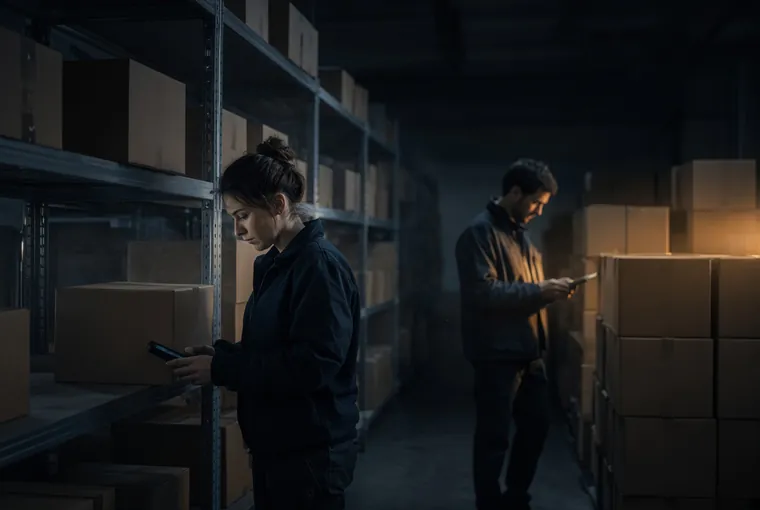
Unknown shrinkage is the merchandise that has vanished without explanation: it is in the book stock, but no longer on the shelf. According to industry studies, it costs around 1 to 2% of retail revenue — often more than the store’s net margin.
Its causes fall into four families: external theft (shoplifting), internal theft, breakage and loss (damaged, expired or discarded products never recorded) and administrative errors — deliveries keyed in wrong, till errors, supplier returns not deducted.
A store that counts only once a year discovers its shrinkage twelve months too late, in one block, unable to say where or when it happened. Counting often turns an annual loss you suffer into early signals you can act on: reinforce an aisle, review a receiving procedure, secure a stockroom.

What else a stocktake reveals
The count variance reveals management anomalies that nothing else shows:
Negative stock — the software shows −3 on a SKU: physically impossible, so a keying error or a barcode that rings up one item as another. Ghost SKUs — never sold, never counted, but still in the catalogue, inflating the stock value. Misplaced items — present but unfindable, so restocked for nothing. Unknown barcodes — very real products the item list does not know, a sign of a delivery that bypassed the system.
Fixing these anomalies is the other half of a stocktake’s value: better-sized orders, fewer phantom stock-outs, an honest stock value on the balance sheet — and a team that stops looking for products that no longer exist.
Annual, cycle, targeted: the three ways to count
The annual stocktake is the big full count, often timed with the financial year end. Necessary, but heavy: it is planned months ahead, mobilises everyone for an evening or a night, and gives only one snapshot a year.
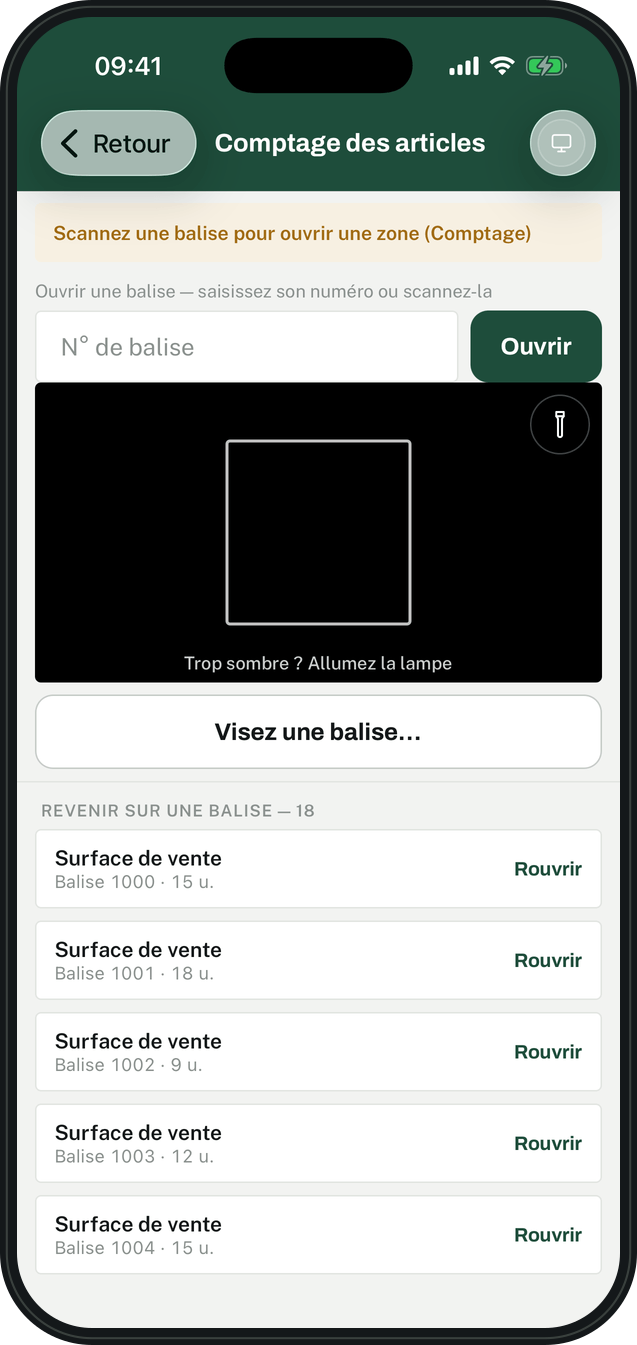
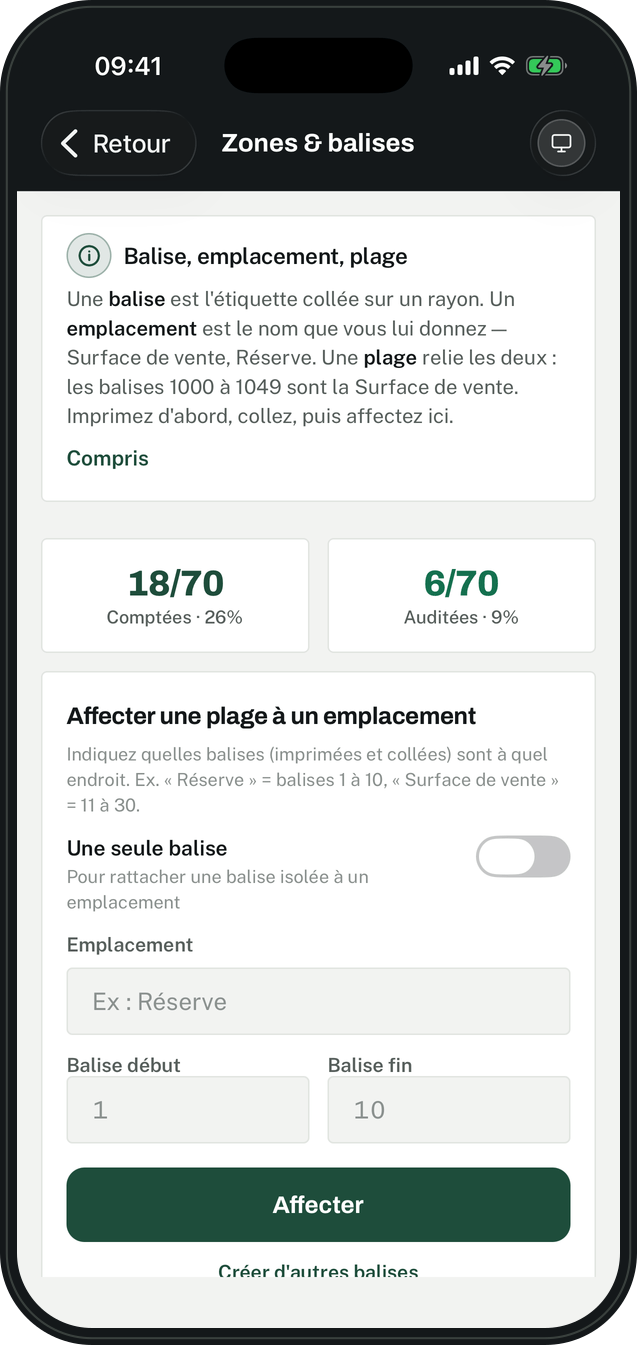
Cycle counting splits the store into zones and counts them one at a time, week after week: a few aisles this Tuesday, the stockroom next week. The store never closes, the effort is spread out, and each zone is checked several times a year. It is the method of the retailers who keep the tightest grip on their stock.
Targeted or random counting focuses the count where things move: aisles prone to theft, best sellers, a product family whose figures look odd — or a zone drawn at random, for the surprise-check effect. It is the natural complement of cycle counting.
The three combine: cycle and targeted counting all year to keep stock accurate, the annual count for the full snapshot — all the faster because the stock is already reliable.
Counting well: the method
Prepare — an up-to-date item list and a book stock frozen at the time of the count: without a reliable point of comparison, the variance means nothing.
Split — clear zones, each opened, counted and closed: that is what guarantees nothing is forgotten or counted twice, even with several counters in parallel.
Check — a double count on sensitive zones, and variances resolved while everyone is still on site: recounting a shelf takes ten minutes the same day.
Correct — the result is used to realign the book stock and deal with the causes. A stocktake whose report stays in a drawer only tired the team out.
Count whenever you want
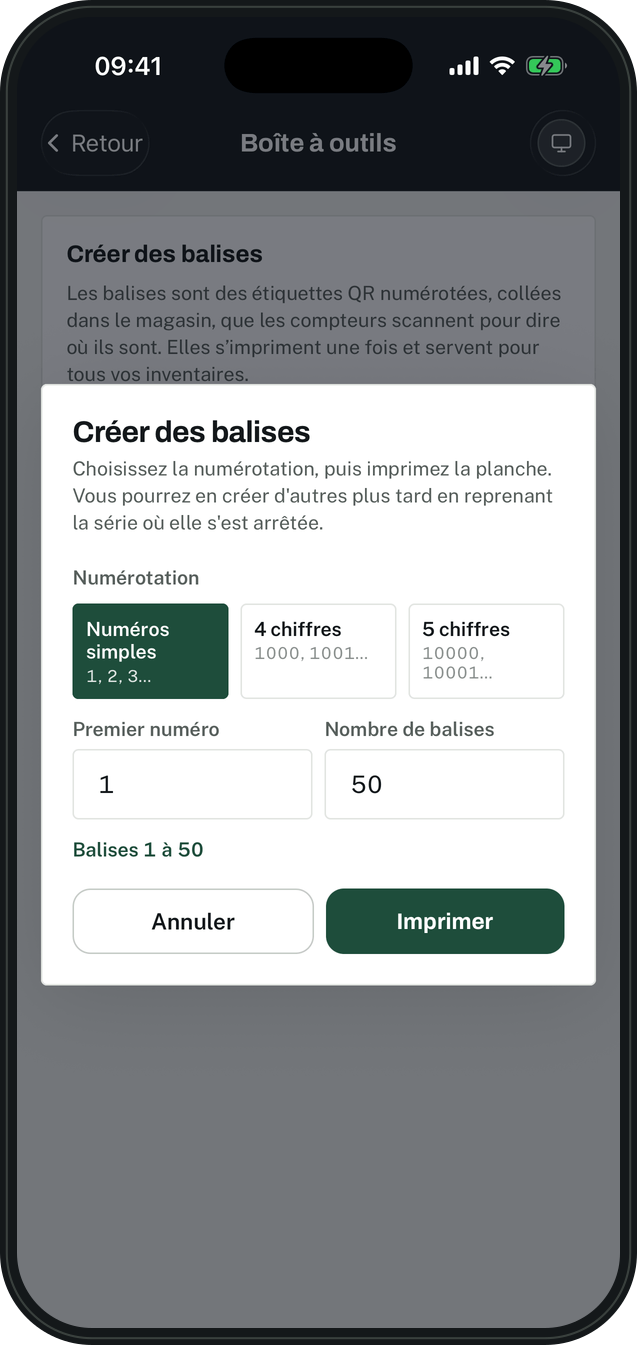
Quantinvo is the tool for this method: zones and tags, double counting, variances resolved live and a report ready for stock correction — as many times a year as you decide.
Why choose us?Write to us